Saturday, April 17, 2010
The Great American Past Time
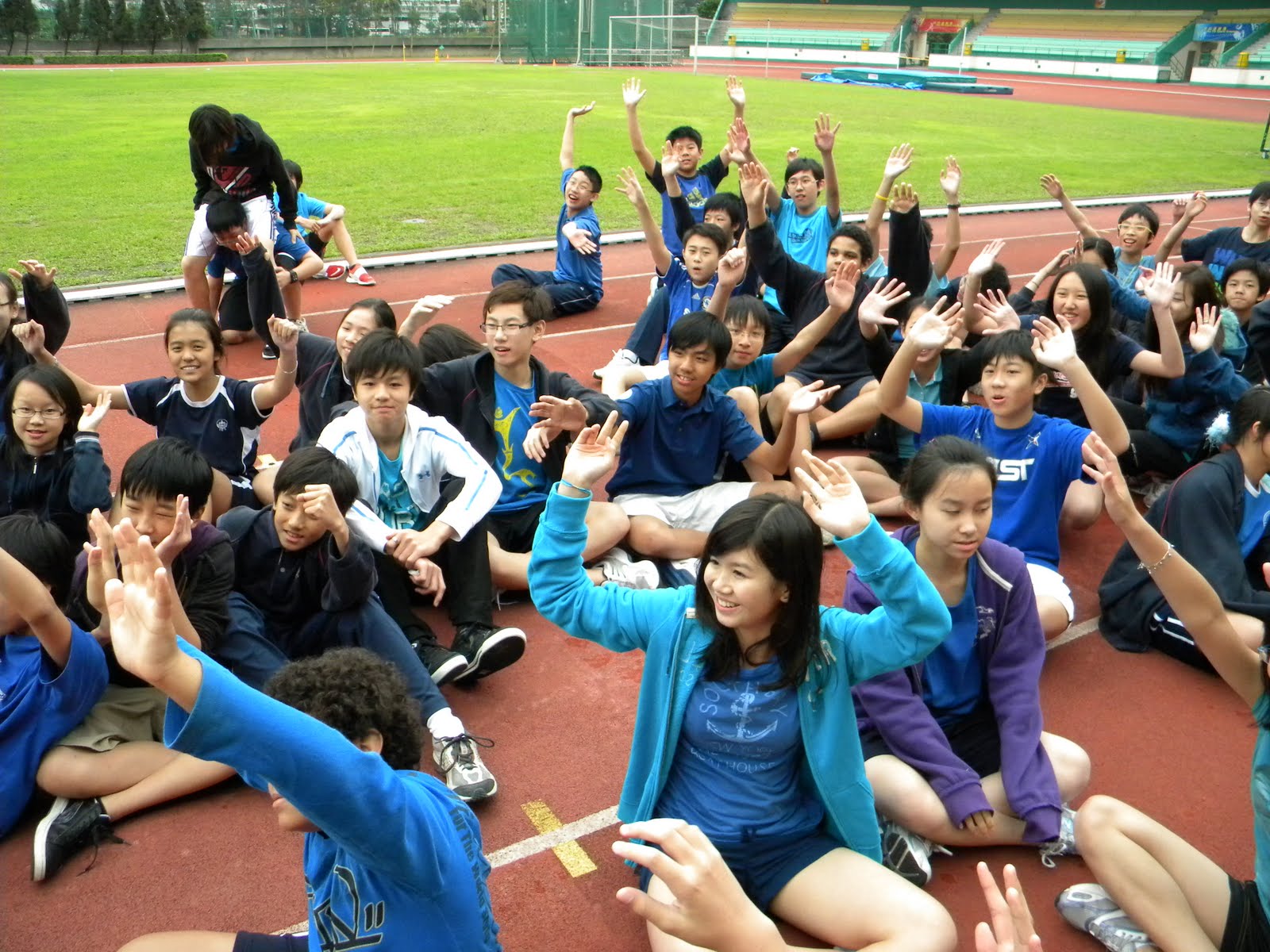
Half an hour earlier, the need for such a conversation became painfully obvious. At our school, we start each day with a forty-five-minute Advisory time which we usually dedicate to a wide variety of Christian-living or pseudo-academic topics. But two or three times a month, we teachers set up sports competitions between Advisory groups play such sports as dodge ball, basketball or –in the case of Thursday morning- kickball.
I have found that in Asia, the kids tend to take whatever pursuit they are engaged in pretty seriously. So while it was “just kickball,” everyone was pretty intense (then again, maybe it was just me who was taking it a little too seriously).
So, fresh from the kickball tournament, I decided that we could –that we should- steal fifteen minutes from first-period English to review some of the finer points of the Great American Past Time. After all, we are an American school.
Okay look gang. First of all let’s talk about tagging up on a fly ball. If it’s a pop up or a line drive . . . what? A pop-up, Natalie, you know, a kick or hit that doesn’t hit the ground. Please don’t interrupt. Okay, if you are on base and the batter –sorry, kicker- hits a fly ball, you have to wait and see whether the fielder catches the ball. If she does, you have to “tag up” on your base before proceeding. I moved the color-coded magnets around the whiteboard. Multiple times this morning, many of you were caught off base and fell victim to this rule. People, you've got to tag up on a fly ball.
Second, some of you don’t seem to know the difference between a forced out and a non-forced out. If you are in the field, and there's a runner on first, then you have a potential forced out at both first and second. If you get the ball, you have the option of either tagging the runner and or simply tagging the bag before the runner gets there. On the other hand –hey Ivan, pay attention, this is important stuff. On the other hand, if there's a runner on second only, there is no forced out at third because the runner doesn’t have to proceed. If you get the ball, you can not simply tag third base. You're going to have to tag the runner directly. Yes, Sarah, I see you there, just relax. We’re going to grade the homework in just a minute. Okay where was I? Oh yeah, just remember, if you do have runners at both first and second, then you do have a forced out option at all three bases.
Even as I am hearing myself explain all this, I realize how complicated it can be. For those of us who grew up playing baseball (and its illegitimate stepchild: kickball), these arcane rules tend to be second nature.
Julie and I originally signed up for a two-year stint in China, but I’m afraid that we may have to extend our stay. I have so much work to do here. I am determined not leave Hong Kong until all of my students know enough to tag up on a pop fly.
It’s going to take some time.
-Jack
Hey boys and girls, now that we’ve gone over the basics, let’s talk about the much-misunderstood Infield Fly Rule . . .
Closing thought: Why is it called a “past time” as in The Great American Past Time? Wouldn’t it make more sense if it were called a “pass time” as in it something we do to pass the time? Just a thought.
Wednesday, April 14, 2010
Our Most Recent Outing part 2 of 2
I was two sentences into my little monologue when I saw twenty-four sets of eyes swing toward the center of the classroom and come to rest on a certain fourteen-year-old blonde. She was frozen in her seat. Suddenly, in the middle of my lesson I remembered that there was something that I had been meaning to do. What was it? Change the oil in the car? Get those pants hemmed? Oh yeah, now I remember: bring Annika up to speed on her cousin’s sexual orientation.
Yup, I had just outed my nephew to my daughter in front of twenty-four of her nearest and dearest friends.
It was just a teensy bit awkward. While I was busy looking for the rewind button, Annika was looking for that elusive hole in the ground.
I realized that I hadn’t referred to my nephew by name and I could see that Annika was mentally scrolling through her long list of cousins. So across the crowded classroom I stage whispered my nephew’s name. It didn’t appear to clear up any of her confusion and bewilderment.
Her fellow classmates starting “oh”-ing as they watched this little mini-family drama unfold in the middle of first period on a Thursday morning.
This was a conversation that I had been meaning to have with Annika. I just never imagined it unfolding quite like this.
I’m pretty sure she didn’t either.
Oops.
That’s what I get for trying to function on five hours sleep.
-Jack
Our Most Recent Outing part 1 of 2
Annika is in my literature class. For the first week of school it was a little weird but then we settled into a routine and it hasn’t really been a big deal.
Until last Thursday, that is.
First, that morning was the last day of our human sexuality unit in my small advisory group. We briefly touched on issues surrounding same-sex attraction. I concluded our small-group advisory time together by reminding students that we want to emulate Jesus by loving and showing grace to all people in our lives no matter what journey they are on.
Then, during first-period literature, my students and I continued our study of “Night” by Elie Wiesel, a Jewish Holocaust survivor. Hitler, of course, targeted not only Jews, but Roma (gypsies), homosexuals, the handicapped, and communists.
I'm always looking for opportunities to tie together various parts of the curriculum. Because the topics overlapped, I used the opportunity to share with this group of students what I had said to my advisory students earlier: no matter our politics or theology- we are to fully love the people in our lives as Jesus modeled for us.
Sunday, April 11, 2010
What are the Chances? part 2 of 2
Ten minutes after the four of us are seated in the restaurant, in walks Tall Bald Guy, his wife, two young sons, and Bald Guy's parents. They sit down two tables away. We are the only customers at this restaurant; in fact, we are probably the only Americans on this tiny spit of an island.
As is wont to happened, we got to talking. We started exchanging the what's and where's of our respective autobiographies. And then it clicked. After just two or three minutes of the basics, I had gathered just enough information for the pieces to fall into place.
Six billion people on the planet, 330 million Americans, and –yup- I am sitting two tables from Rodney Winslow’s brother and mom and dad.
What are the chances?
Saturday, April 10, 2010
What are the Chances? Part 1 of 2
When we were considering the move to Hong Kong, we found out that Rick’s cousin Rodney Winslow not only taught in Hong Kong ten years ago, he actually taught at ICS. Sara gave me Rodney’s phone number and Rodney and I talked on the phone. That conversation –in part- helped us make the decision to make the move to Hong Kong.
Fast forward fifteen months and 13,000 miles. We are now living in Hong Kong. Actually we are on Spring Break in The Philippines. Specifically we are on the small island of Bohol. Well, actually we are not on Bohol proper, we are on the small island of Panglao just off the coast of Bohol. And on this particular afternoon, we’re not even on the small island of Panglao; we are on some tiny island called I-Don’t-Know-What-It’s-Called. The only way to get to this blip on the map is to ride on a rickety outrigger canoe with a rumbling inboard motor for forty-five minutes, which is exactly what we did earlier on this particular morning.
The main source of income on this dot of an island is for the locals to paddle tourist out to the reef to snorkel and dive. Despite the fact that it is Spring Break, there are few people around. It probably has to do with the fact that it is a rainy, overcast day (great planning VanNoords).
Friday, April 9, 2010
Thursday, April 8, 2010
Filipino Jeepneys
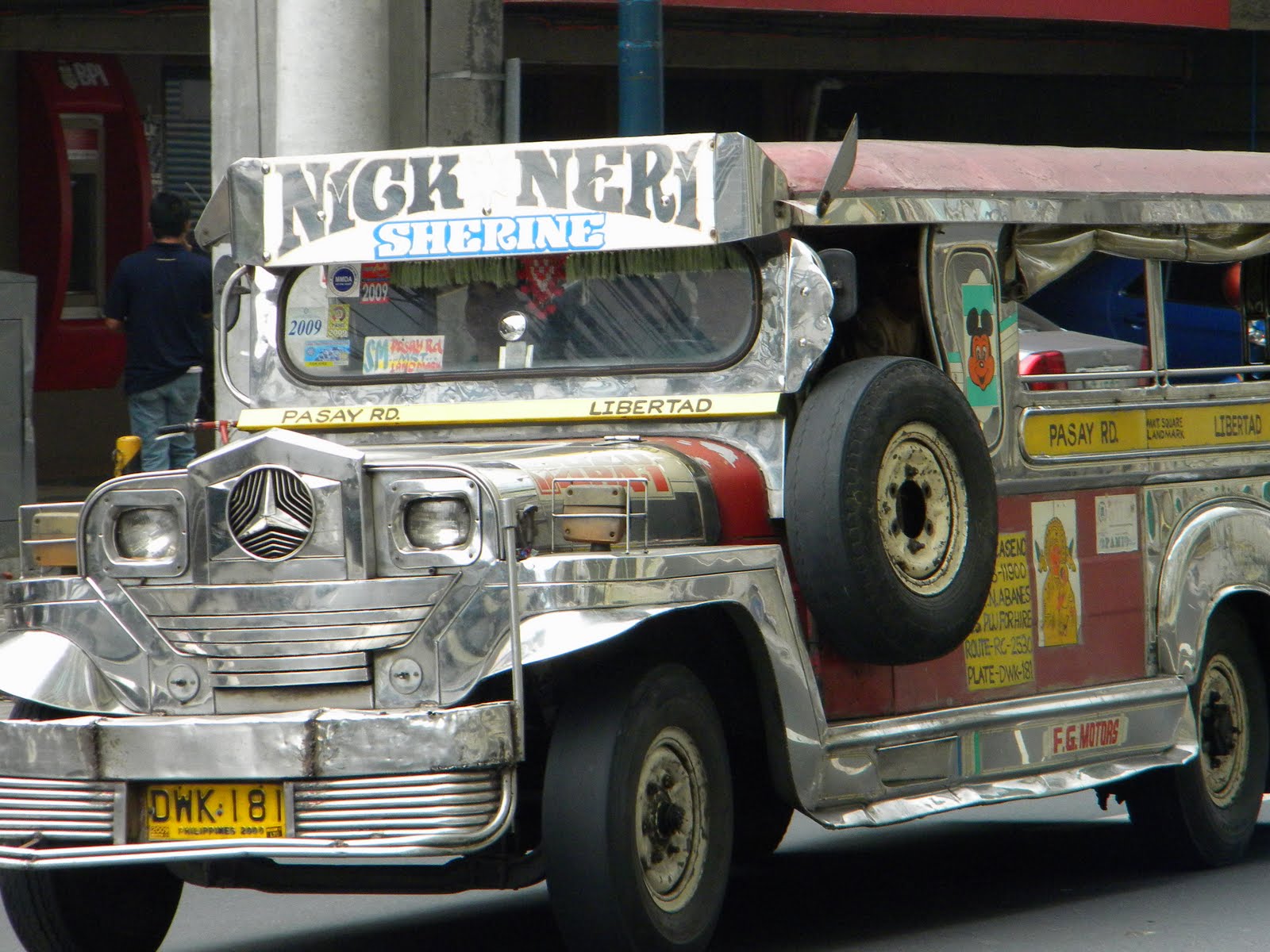
One of the coolest things about the Philippines are the ubiquitous Jeepneys. Inspired by all the jeeps that the Americas brought in during World War II, Filipinos started building their own covered vehicles. Only, they made them longer. And out of stainless steel. And then they decorated them with lots of extra roof-top lights and fringe and custom air-brush paint jobs. They are everywhere in the Philippines; each one cooler and more colorful than the last. In the back, they have two large benches that run from front to back.
The jeepney function like a private-sector bus system. One of my biggest regrets is that I never took the opportunity to ride in a jeepney while in the Philippines. But figuring out which jeepney to take can be very tricky for a local, and virtually impossible for a tourist.
Subscribe to:
Posts (Atom)