



 It was 8:00 in the morning and the village was abuzz with activity. Six young men already had a rousing game of volleyball going on a net that was so threadbare that it could hardly be called a net. Several groups of small kids were scrambling around.
 I left the dirt path and stepped up onto the makeshift boardwalk. I saw a young man in his early twenties standing next to the boardwalk on a small piece of foam on an equally small piece of terra firma. He was washing for the day up at a public water spigot. Sitting on the boardwalk at chest-level was his blue plastic bucket in which he had all his morning toiletries.
I am usually pretty uninhibited with my camera –to a fault- but I decided that today was a pretty good day to keep my camera in my backpack. I never for a moment felt unsafe. It just turns out that when it comes to social propriety –contrary to the rumors- even I have my limits. I decided that this morning, maybe I should just wander, observe, and absorb.Northern Borneo is very close to Palawan Island, Philippines and the water village is predominately populated by Filipino refugees,. While there was running water and I did see a few signs of electricity, I suspect that the city of Kota Kinabalu was not officially providing these services. They certainly weren’t provided garbage pick-up services.
I became intrigued with the water village/slum and wanted to know more. Later in the week when I had internet access, I searched the web for more information. I’m pretty adept at finding what I am looking for on the internet, but for the life of me, aside from two other blog entries from fellow travelers and a few pictures on Flicker, I couldn’t find any information on the slum in the heart of Kota Kinabalu. I guess there is not only a big ten-foot green fence around the actual village, there is a virtual one as well. On the three or four maps of KK that I had, the village wasn’t even given a name. It was simply labeled “Water Village.”Later in the week, I found out from an taxi driver that one of the new, high rise hotels just down the road was built on the site of a smaller water village. I realized that it was only a matter of time before the local government and developers prevailed and the water village would be pushed aside for yet another series of hotels. I don’t know if I will ever make it back to Kota Kinabalu. But if I do, I am guessing the water village won’t be there any longer.
But for now, I have a wife and two daughters back in the hotel who are probably waking up just about now and will be looking to start their day. “Did you see the slum just south of town?”
 We were having dinner with my colleague Nate and his family at a local Malaysian restaurant in Kota Kinabula.
I hadn’t.I was a little surprised when Nate explained to me where the slum was located. It was right in between the heart of downtown Kota Kinabalu and the five-star Sutera Pacific resort. I had traveled this route; it was wall-to-wall hotels and other tourist amenities. Or so I thought.
The next morning, while the girls and Julie slept in, I grabbed my camera, slipped out of the hotel room, and started walking south out of town.
Ten minutes later, I was standing at the entrance of the water village slum. Sure enough, the village was hemmed in by high-rise hotels of varying degrees of luxuriousness. I now understood why I’d missed it when we’d ridden past it: the government of Kota Kinabalu had erected a ten-foot high, corrugated metal wall all the way around the village. At the northeast corner where I now stood, was a forty-foot gap in the fence with a wide dirt path leading into the village.
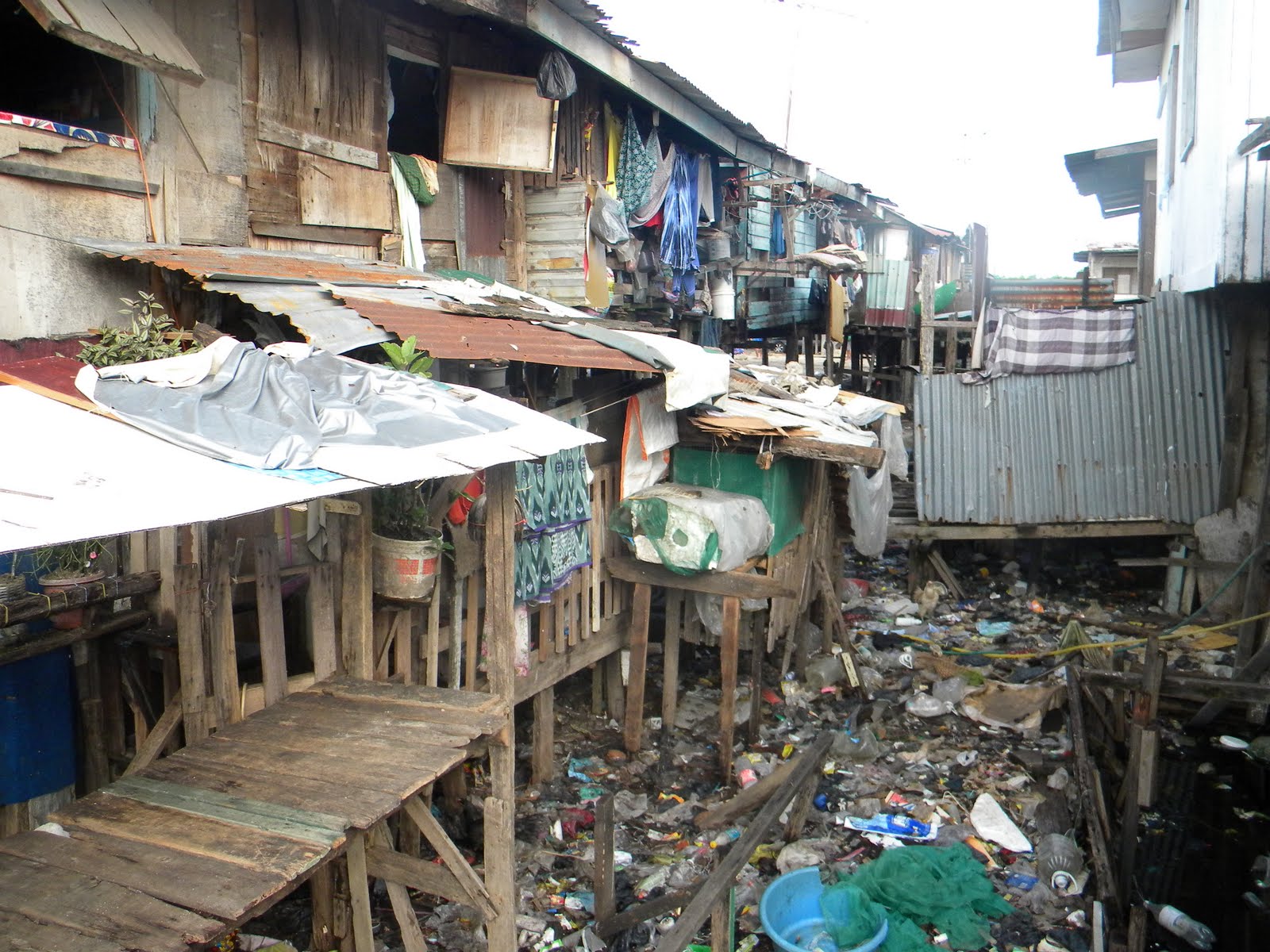
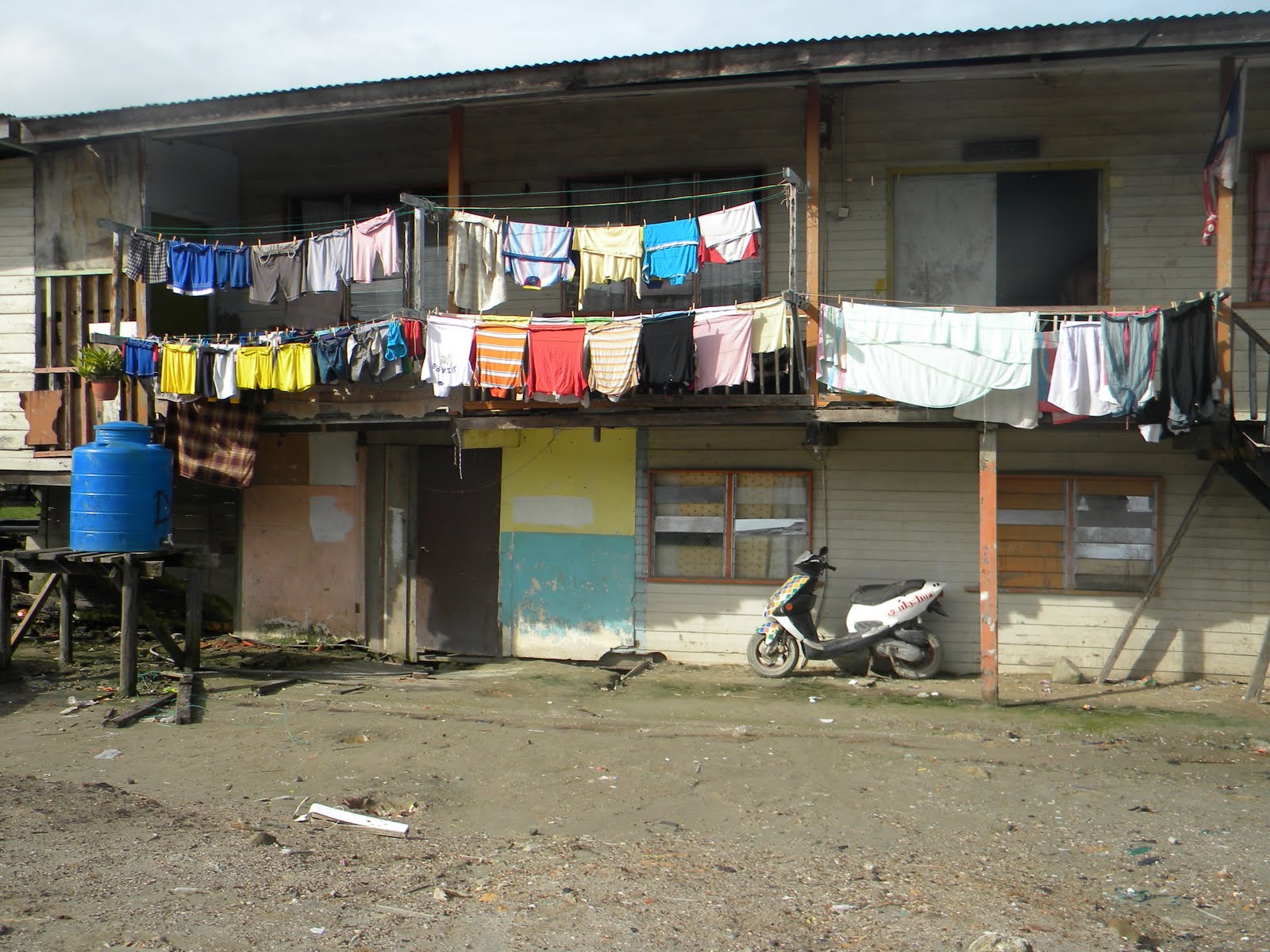
The village is on the site of a former mangrove. The water was still there but the trees were long gone –torn down to make way for houses which were little more than huts. The houses were all built on stilts to elevate them above the water. A network of very crudely built boardwalks zigzagged through the haphazard arrangement of wooden houses.
Sadly, the water that was next to, around, and under the houses had become a giant cesspool from all of the garbage that had been dumped into it over the years. Plastic bottles, broken flip flops, and discarded toys created a dense covering of flotsam.
 What I didn’t want was an ashtray with “Sabah, Borneo” etched on it. But all the souvenirs in the handicraft market seemed to be . . . well, so souveniry. I wanted to bring back a few items to remind us of our trip to Malaysia, but we certainly didn’t need any more postcard.
 The taxis in the city of Kota Kinabalu all have illuminated signs on top that read “Teksi” which is pretty neat because it is (almost) the phonetic spelling of the word “taxi.” Same but different. Fun. Cool.
After seven days in Kota Kinabalu and our third fruitless foray into a market, I found myself staring at the top of a taxi. I started to wonder when it got dark in Borneo and then I started to wonder where I could get my hands on a screwdriver.Then I came up with a more rational, low-risk plan. Right next to the laundry shop where we had been bringing our dirty clothes throughout the week (a load of laundry for just ten ringgit per kilogram!) was a small auto supply store. When I enquired, the guy behind the counter told me they didn’t have any –they mostly sold audio equipment- but he knew where I might get one. He wrote down an address on a scrap of paper.
The family and I hopped into a taxi to go to dinner. I gave the paper to the driver. He said he knew the shop but it would be closed by now. He offered to drive me past it on our way to dinner so that I could find it on my own the next day. It was a good thing, because I never would have found this little shop tuck away in an industrial section of town. Surprisingly, when we pulled up to the shop at 7:12 p.m., it was still open.
It took a little bit of pantomiming, but when I finally got across what it was that I wanted, the clerk pointed up. Sure enough, there hanging above my head, were several plastic “teksi” signs.Initially, she was asking 65 ringgit, but we finally agreed on fifty.
I think I’ll run an electric cord to it, put a light bulb in it, and turn it into a desk lamp. It will be quite the conversational piece in my classroom.
Nine days in Borneo and I made it out without buying a monkey carved from a coconut.
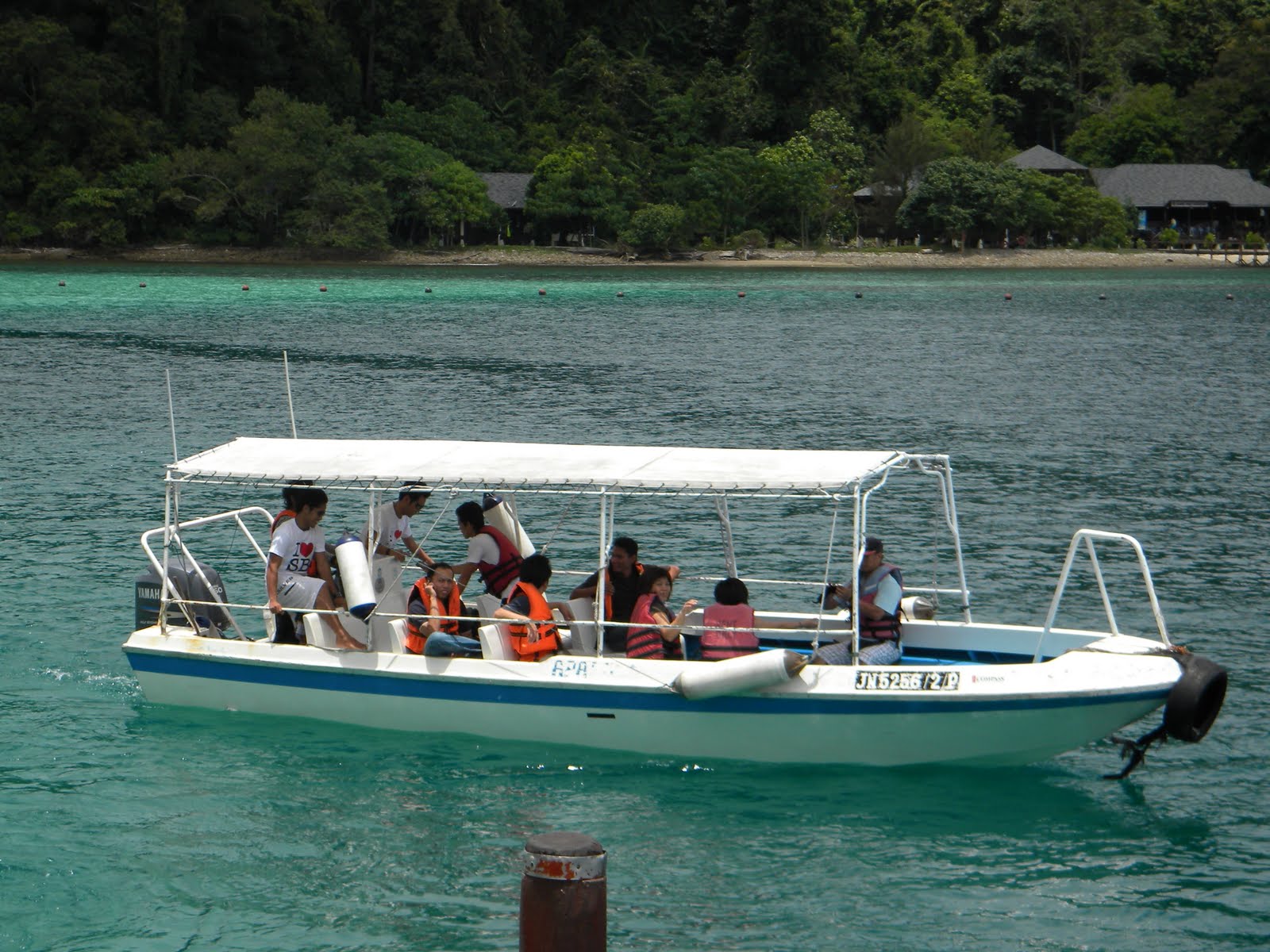
 Ironically, the tropical city of Kota Kinabula which is a fairly popular tourist destination doesn’t have a single beach. What it does have are several outlying islands. For a few ringgits you can catch a ride on a boat that will take you to the island of your choice -which is exactly what we did on our first Sunday in Borneo.
 The island and the beach were beautiful. The island had just the right amount of amenities without being overdeveloped.
We had been on the beach for a couple of hours and had just finished doing some snorkeling in the shallow waters near the beach when we saw something moving over by the picnic tables. It moved again. Oh my goodness, it looks like a small dinosaur! It wasn’t of course; it was actually a good sized monitor lizard. Two of them to be precise. I had seen pictures of monitor lizards before, but I was not prepared to encounter one face to face.
Once we realized they were more interested in eating picnic scraps more than in eating us, we warmed up to them. We didn’t exactly pet them, but we did get close enough to get ourselves in a couple of picture with them.
 Just over two hours north of the city of Kota Kinabula is Mount Kinabula, the tallest peak in Southeast Asia. Despite its height, Mount Kinabalu is very climbable and is a very popular destination among tourists. Even though we weren’t planning on making the ascent to the peak, we planned on spending two days in the National park on the slopes of Mt. Kinabalu. It is one of the most bio-diverse regions in the world and is listed as one of 700 World Heritage sites.
 As we walked from our low-budget hotel to the park entrance, it drizzled. Once inside the park’s welcome center, we waited for the now-steady rain to subside. Finally we ventured out on our two-hour hike through the jungles of Borneo. It rained on and off. After our first hike, we bought thin, overpriced rain ponchos before heading out on our second hike of the day. They helped. A little.
Hiking in Mt. Kinabalu offers some of the most amazing views in Southeast Asia. We didn’t see a single one of them. For the entire twenty-four hours we were on the mountain, a cloud bank obscured the view.
After a morning of soggy hiking on day two, we sought refuge from the incessant rain by ducking in to the interpretive center (does anybody call them “museums” anymore?). Aside from the lonely attendant behind the desk, we were the only one in the small heritage museum.
Previously, we had gotten conflicting information from some locals about whether this was Borneo’s rainy season or whether it was the dry season. After we had had our fill of diorama’s of Malaysian fishing villages, we decided to take the opportunity to clarify just exact which season Borneo was in.
We asked the attendant behind the desk. She said it was the dry season. We told her that someone had told us earlier that it was the wet season. As politely as possible, she assured us that it was the dry season. Julie off-handedly joked that it sure was raining a lot considering it was the dry season.
I’m sure that what the attendant said next was in part a result of a language barrier. But, I suspect the other part was her attempt to help everyone involved –including the two people who had previously given us conflicting information- save face. She gave it a moment’s consideration and then responded to Julie, “Well, maybe the rules have changed.”
Well, whoever changed the rules, could you please ask them to change them back. I’d kind of like to let my feet dry out. And I wouldn’t mind catching a glimpse of that mountain peak everyone is talking about.