Monday, April 11, 2011

Water Village part 1 of 2

“Did you see the slum just south of town?”

We were having dinner with my colleague Nate and his family at a local Malaysian restaurant in Kota Kinabula.

I hadn’t.

I was a little surprised when Nate explained to me where the slum was located. It was right in between the heart of downtown Kota Kinabalu and the five-star Sutera Pacific resort. I had traveled this route; it was wall-to-wall hotels and other tourist amenities. Or so I thought.

The next morning, while the girls and Julie slept in, I grabbed my camera, slipped out of the hotel room, and started walking south out of town.

Ten minutes later, I was standing at the entrance of the water village slum. Sure enough, the village was hemmed in by high-rise hotels of varying degrees of luxuriousness. I now understood why I’d missed it when we’d ridden past it: the government of Kota Kinabalu had erected a ten-foot high, corrugated metal wall all the way around the village. At the northeast corner where I now stood, was a forty-foot gap in the fence with a wide dirt path leading into the village.

The village is on the site of a former mangrove. The water was still there but the trees were long gone –torn down to make way for houses which were little more than huts. The houses were all built on stilts to elevate them above the water. A network of very crudely built boardwalks zigzagged through the haphazard arrangement of wooden houses.

Sadly, the water that was next to, around, and under the houses had become a giant cesspool from all of the garbage that had been dumped into it over the years. Plastic bottles, broken flip flops, and discarded toys created a dense covering of flotsam.

Saturday, April 9, 2011

Hey, Teksi!

What I didn’t want was an ashtray with “Sabah, Borneo” etched on it. But all the souvenirs in the handicraft market seemed to be . . . well, so souveniry. I wanted to bring back a few items to remind us of our trip to Malaysia, but we certainly didn’t need any more postcard.

The taxis in the city of Kota Kinabalu all have illuminated signs on top that read “Teksi” which is pretty neat because it is (almost) the phonetic spelling of the word “taxi.” Same but different. Fun. Cool.

After seven days in Kota Kinabalu and our third fruitless foray into a market, I found myself staring at the top of a taxi. I started to wonder when it got dark in Borneo and then I started to wonder where I could get my hands on a screwdriver.

Then I came up with a more rational, low-risk plan. Right next to the laundry shop where we had been bringing our dirty clothes throughout the week (a load of laundry for just ten ringgit per kilogram!) was a small auto supply store. When I enquired, the guy behind the counter told me they didn’t have any –they mostly sold audio equipment- but he knew where I might get one. He wrote down an address on a scrap of paper.

The family and I hopped into a taxi to go to dinner. I gave the paper to the driver. He said he knew the shop but it would be closed by now. He offered to drive me past it on our way to dinner so that I could find it on my own the next day. It was a good thing, because I never would have found this little shop tuck away in an industrial section of town. Surprisingly, when we pulled up to the shop at 7:12 p.m., it was still open.

It took a little bit of pantomiming, but when I finally got across what it was that I wanted, the clerk pointed up. Sure enough, there hanging above my head, were several plastic “teksi” signs.

Initially, she was asking 65 ringgit, but we finally agreed on fifty.

I think I’ll run an electric cord to it, put a light bulb in it, and turn it into a desk lamp. It will be quite the conversational piece in my classroom.

Nine days in Borneo and I made it out without buying a monkey carved from a coconut.

Thursday, April 7, 2011

Monitor Lizards in Borneo


Monitor on my Monitor

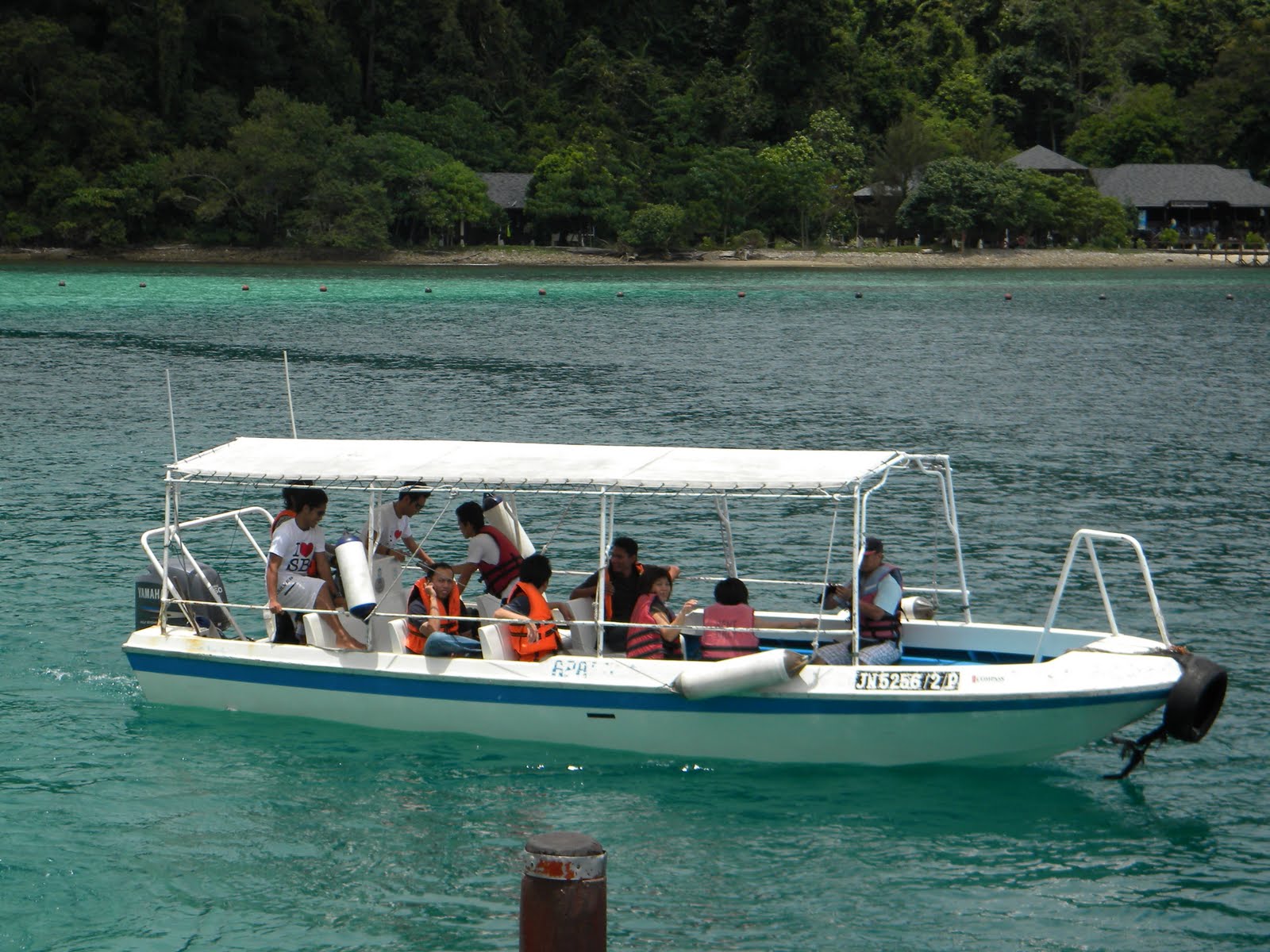
Ironically, the tropical city of Kota Kinabula which is a fairly popular tourist destination doesn’t have a single beach. What it does have are several outlying islands. For a few ringgits you can catch a ride on a boat that will take you to the island of your choice -which is exactly what we did on our first Sunday in Borneo.

The island and the beach were beautiful. The island had just the right amount of amenities without being overdeveloped.

We had been on the beach for a couple of hours and had just finished doing some snorkeling in the shallow waters near the beach when we saw something moving over by the picnic tables. It moved again. Oh my goodness, it looks like a small dinosaur! It wasn’t of course; it was actually a good sized monitor lizard. Two of them to be precise. I had seen pictures of monitor lizards before, but I was not prepared to encounter one face to face.

Once we realized they were more interested in eating picnic scraps more than in eating us, we warmed up to them. We didn’t exactly pet them, but we did get close enough to get ourselves in a couple of picture with them.

Tuesday, April 5, 2011

on Mt. Kinabalu


Oh, so that’s why it's called a rainforest

Just over two hours north of the city of Kota Kinabula is Mount Kinabula, the tallest peak in Southeast Asia. Despite its height, Mount Kinabalu is very climbable and is a very popular destination among tourists. Even though we weren’t planning on making the ascent to the peak, we planned on spending two days in the National park on the slopes of Mt. Kinabalu. It is one of the most bio-diverse regions in the world and is listed as one of 700 World Heritage sites.

As we walked from our low-budget hotel to the park entrance, it drizzled. Once inside the park’s welcome center, we waited for the now-steady rain to subside. Finally we ventured out on our two-hour hike through the jungles of Borneo. It rained on and off. After our first hike, we bought thin, overpriced rain ponchos before heading out on our second hike of the day. They helped. A little.

Hiking in Mt. Kinabalu offers some of the most amazing views in Southeast Asia. We didn’t see a single one of them. For the entire twenty-four hours we were on the mountain, a cloud bank obscured the view.

After a morning of soggy hiking on day two, we sought refuge from the incessant rain by ducking in to the interpretive center (does anybody call them “museums” anymore?). Aside from the lonely attendant behind the desk, we were the only one in the small heritage museum.

Previously, we had gotten conflicting information from some locals about whether this was Borneo’s rainy season or whether it was the dry season. After we had had our fill of diorama’s of Malaysian fishing villages, we decided to take the opportunity to clarify just exact which season Borneo was in.

We asked the attendant behind the desk. She said it was the dry season. We told her that someone had told us earlier that it was the wet season. As politely as possible, she assured us that it was the dry season. Julie off-handedly joked that it sure was raining a lot considering it was the dry season.

I’m sure that what the attendant said next was in part a result of a language barrier. But, I suspect the other part was her attempt to help everyone involved –including the two people who had previously given us conflicting information- save face. She gave it a moment’s consideration and then responded to Julie, “Well, maybe the rules have changed.”

Well, whoever changed the rules, could you please ask them to change them back. I’d kind of like to let my feet dry out. And I wouldn’t mind catching a glimpse of that mountain peak everyone is talking about.

Monday, April 4, 2011

Neutralizing the Proton

One of the cool things about living in Asia is getting to see models of cars that aren't sold in The States. In fact, not only do I see unfamiliar models, sometimes I encounter entire car companies I’ve never heard of.

In Malaysia, I started to see Proton cars. A lot of them, actually.

In 1983, Malaysia’s long-term Prime Minister, Dr. Mahathir Mohamad decided that rather than importing other countries’ cars, Malaysia should produce its own car. With a little technological help from Mitsubishi, the first Proton hit the streets of Malaysia in 1985. In just three years, the Proton car had managed to capture over 70% of the Malaysia car market.

But it wasn’t all just national pride. To ensure the success of its first national car, the government slapped steep tariffs on imports and simultaneously offered rebates and tax breaks for the Proton. The result was that the Proton was priced 30-60% cheaper than comparable imports.
No wonder they cornered 70% of the market. Since then, the ASEAN Free Trade Agreement -of which Malaysia is now a member- stipulates that as of 2008, large trade barriers like tariffs and preferential discounts are not permissible. The tariffs are now down to 5% and Proton’s market share has dropped to just 30%.

So much for national pride.

But at least they still have that cool stylized tiger in its logo.